





How eight Cowrywise teammates built Aríyá to make welcoming guests at CXCon26 easier.
At CXCon 2025, our check-in system was an Excel spreadsheet.
Yes, Excel.
Whenever someone arrived, a volunteer had to search for their name, find the correct record, and manually mark them as checked in. It got trickier when several people shared the same name. Then it meant asking for email addresses and scrolling through results to find the right person.
Now imagine doing that for hundreds of guests, with a queue forming at the entrance. It worked, but it wasn’t an experience we wanted to repeat.
CXCon26 had over 3,000 registrations. We needed something that would help volunteers check people in without the back-and-forth, and give organisers a clearer picture of what was happening throughout the event.
That’s how Aríyá came about. Aríyá means party in Yoruba, which felt fitting. After all, a great event experience starts long before the first speaker gets on stage.
A small team, one shared goal
The original idea was simple: replace the spreadsheet with QR codes. Attendees would get personalised tickets, volunteers would scan them at the entrance, and everyone could get on with enjoying the event.
But as we thought through how the day would actually work, scanning was only one part of the problem. Someone still needed to create and manage the event. Tickets had to reach the right people. Volunteers needed a reliable way to confirm who had arrived, and organisers needed to know how many guests were in.
We weren’t just replacing a spreadsheet anymore. We were building an event management platform.
There was one small problem. Our engineering team was already deep into a major release, and we had about a week to get the mobile app working.
With that little time, the most important decision was what had to work on day one. For Aríyá, that meant the entrance: getting attendees their tickets, helping volunteers find the right guests, preventing duplicate check-ins, and making attendance visible to organisers. Everything came back to one question: what would make checking in easier when hundreds of people started arriving?
Eight of us worked on that question. I coordinated from the product side. Moronke built the mobile app volunteers would use at the door. Daniel built the backend systems for ticket verification and attendance. Favour built the web app for organisers and the dashboard that showed arrivals as they happened. Saviour designed the volunteer experience, and Luke gave Aríyá its visual identity.
And then there were Precious and Didi from Customer Experience. They brought something just as important as the code and designs: an understanding of what goes wrong when you’re welcoming hundreds of people.
People forget where they saved their tickets. Some can’t find the confirmation email. Others share a name with several people on the list. And occasionally, someone presents a ticket that’s already been used.
These aren’t unusual situations, and volunteers need to handle them without holding up the queue. So Aríyá couldn’t be designed only for the guest who arrived with everything ready. It also had to work for the person who didn’t.
Making check-ins feel effortless
Picture a volunteer at the entrance. An attendee walks up, shows a ticket and gets scanned. The volunteer needs to know straight away whether that person can go in, not after checking another spreadsheet, and not after working out what an error message means.
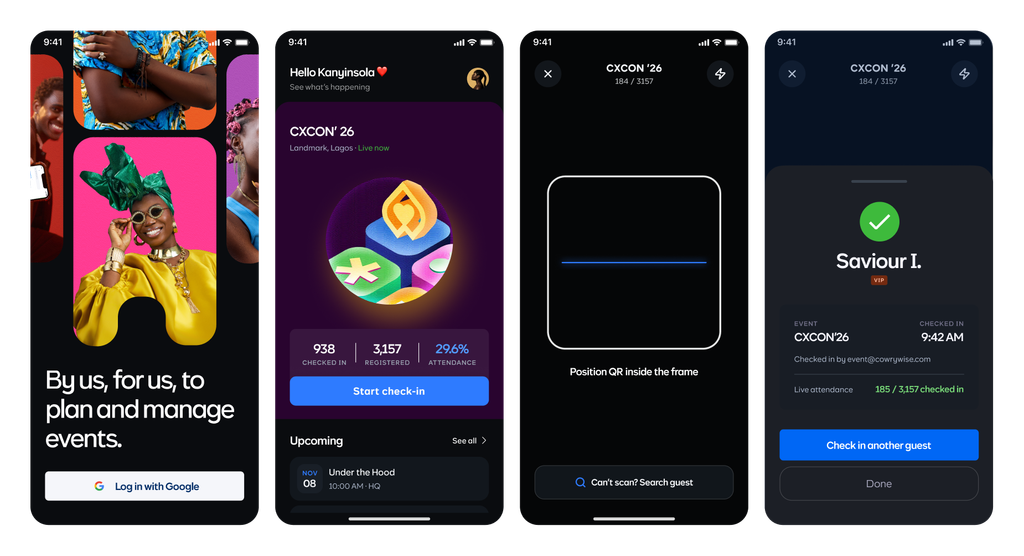
So after every scan, Aríyá gives the volunteer one of three clear answers: checked in, already checked in or invalid ticket.
For guests who couldn’t find their QR codes, volunteers could look them up by name, email address, or phone number instead of sending them off to search their inboxes. It’s a small feature on paper. But it means the person who can’t find their ticket doesn’t become a problem the whole queue waits for.
For anyone curious about the engineering behind ticket verification and the scanner, Moronke has written a separate technical breakdown. Read the full article here
Then came CXCon26
Building an app that works in testing is one thing. Having people depend on it while hundreds of guests arrive is another.
The real test came at 10 AM. Between 10 and 11 AM, 376 guests checked in. By noon, the number had reached 687. By the end of CXCon26, more than 900 attendees had checked in through Aríyá.
We didn’t time the spreadsheet process the year before, so we can’t tell you exactly how much faster Aríyá was. But most of the manual steps were gone. Instead of searching records and updating a spreadsheet, volunteers could scan a ticket, see the result and welcome the next guest.
Aríyá also proved useful beyond the entrance. Because Favour’s dashboard updated as guests arrived, organisers had a live view of attendance. At one point, it showed us we would need more seating, and the team made arrangements before the hall became crowded. The food and merchandise teams planned around actual arrivals rather than estimates. And attendee tags helped volunteers recognise speakers and VIPs at check-in. All 15 speakers checked in.
We had set out to make checking in easier. By making attendance visible as people arrived, we had also given other teams a better way to make decisions during the event. Aríyá wasn’t only helping us welcome people. It was helping us run the event.
There’s rice at home
During the launch, I joked about using platforms like Luma or Tix when there was already “rice at home”.
I still think the joke captures something about how Aríyá came together. An existing event platform might well have handled much of what we needed. And building your own software isn’t always the better choice: it takes time, resources and ongoing maintenance, and now that Aríyá exists, we’re responsible for keeping it useful.
But in this case, building it ourselves meant we could shape the experience around how our volunteers and organisers actually work, with the people who understood those needs helping to build it. And now we have a platform we can keep building on for future events.
A good start
The theme for CXCon26 was Engineering Experiences, and Aríyá felt like a practical example of it: we noticed something that wasn’t working as well as it could, brought the right people together and made it better.
A year earlier, welcoming a guest meant searching a spreadsheet, matching their details and manually recording their arrival. This time, volunteers could scan a ticket, see the result and welcome the next person.
It’s a small difference when you describe it in a sentence. But when you’re standing at the entrance, or waiting in the queue to get in, those small details matter.
There’s still more we can do with Aríyá, and plenty we’ll learn as we use it for future events. But that’s a pretty good start.
After all, what’s a party without a good welcome?
The people behind Aríyá
Moronke Anifowose, Mobile Engineer
Built Aríyá’s Android and iOS app, including the scanner volunteers used at the entrance.
Daniel Coker, Backend Engineer
Built the systems behind ticket verification, check-in and attendance tracking, including the safeguards that stop a ticket from being used more than once.
Favour Felix (DoubleF), Front-end Engineer
Built the web app organisers used to set up the event, and the live attendance dashboard used throughout the day.
Saviour Inyang, Product Designer
Designed the volunteer app and check-in experience, from sign-in to ticket scanning and the result screens.
Luke Bamtefa, Brand Designer
Created Aríyá’s visual identity.
Kanyinsola Ibikunle, Product Manager
Coordinated the project across teams and wrote this story.
Precious and Didi, Customer Experience
Brought the realities of guest check-in into the team’s thinking and kept the experience focused on the people using it.